Home › Pool Cage Rescreening
Kissimmee Screening provides complete pool cage rescreening in Kissimmee, FL to renew aging or damaged enclosures. We remove brittle, discolored mesh and install fresh, premium screen that improves airflow and visibility while keeping bugs out. Whether you need a few panels or an entire cage rescreened, we work efficiently so your pool is ready to enjoy again quickly.
Kissimmee Screening provides professional pool cage rescreen throughout Kissimmee, FL, Florida and the surrounding area. Our licensed, insured crew delivers safe, clean, on-time work with a free estimate before anything begins. Call (407) 974-3495 or request your free quote.
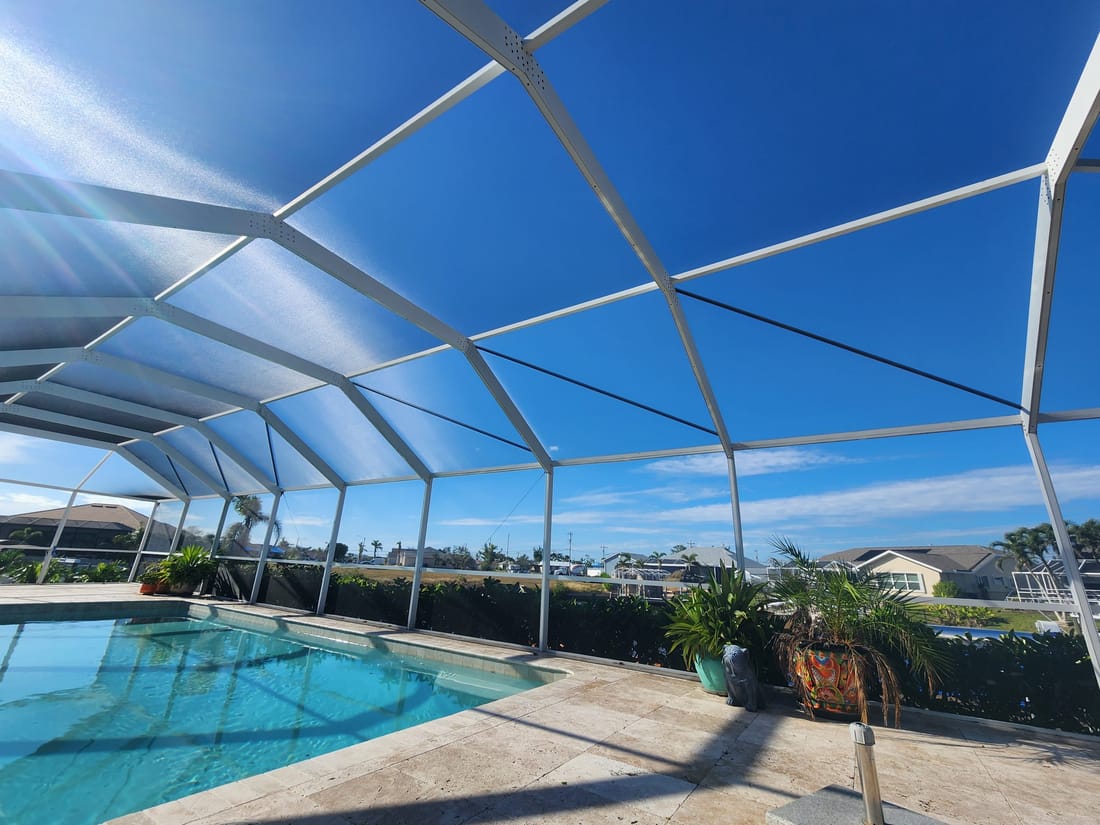
Pool cage rescreening that fits Kissimmee homes and weather
Pool cage rescreening is not just swapping out old mesh. In Central Florida, the screen on your enclosure stands up to constant sun, hurricane season wind, and fine debris from nearby lakes and construction. Kissimmee Screening focuses on rebuilding that protective layer so you get your bug control, shade, and safety back without paying for a full new cage.
When we inspect a pool cage in Kissimmee, we look at more than torn panels. We check the aluminum framing for corrosion, loose fasteners, pulled spline channels, sagging doors, and enclosure anchors at the deck. If the frame is solid, a full rescreen is usually the most cost effective option. If there is structural damage, we explain what can be repaired during the rescreen and what might need a separate structural fix.
Most customers call us because of one or more of these issues: ripped panels after a storm, brittle screen that cracks when touched, gaps at the roof seams where bugs and lizards get in, or doors that no longer close tightly. Rescreening addresses all of these at once, so you avoid chasing one panel at a time and paying multiple trip charges.
How the pool cage rescreen process works from start to finish
Kissimmee Screening follows a clear, step-by-step process so you know what will happen to your pool cage and in what order.
First, we measure every bay (each opening between aluminum members) and note the exact screen type and color you choose. We also look for any deck obstructions, like attached privacy screens, lights, or fans, that may need to be temporarily removed.
Second, we remove the old screen and spline. This is done section by section so the frame is not twisted by one side being completely bare while the other side is still under tension. We use ladders and, for taller cages, rolling scaffolds or walk boards. We collect old screen and spline as we go so it does not end up in your pool or landscaping.
Third, we clean and prep the frame. On most Kissimmee enclosures, there is a buildup of algae, dust, and fine sand in the spline channels. We brush and blow these out, then tighten or replace rusted screws, adjust door closers, and replace worn bug sweeps at the bottom of doors if needed.
Fourth, we install the new screen. We roll the screen across each bay, pull it tight in both directions, then insert new spline with the correct diameter for your channels. We pay special attention to roof panels, since poor tension here leads to future sagging. For large roof spans, we often work with two technicians so the screen goes in evenly without wrinkles.
Finally, we walk the enclosure with you. We check all seams, doors, and corners, skim any loose debris from the pool if needed, and remove all old materials from your property. You end up with a tight, clean enclosure that looks close to new, without having replaced the aluminum cage.
Screen material options and what actually makes sense in Kissimmee
Not every screen type is worth the extra cost in our climate. Kissimmee Screening installs several specific meshes that hold up well to Central Florida conditions, and we explain the tradeoffs so you can pick what fits your budget and how you use your pool.
Standard 18/14 fiberglass screen is the most common option. It keeps out most insects, gives good airflow, and is the most affordable. For many Kissimmee homeowners, this is adequate if the main concern is bugs and falling leaves.
For homes near water or retention ponds, we often recommend a tighter 20/20 or a no-see-um screen. This has smaller openings that block midges and tiny gnats that are common around wetlands. The tradeoff is slightly less airflow and a bit more wind resistance, which is why proper tensioning and attachment are important.
Pet-resistant or heavy-duty screens use thicker fibers. These are useful if you have cats that climb or dogs that push against the lower panels. They cost more per square foot, but typically pay off by preventing repeated lower-panel repairs.
We also discuss Florida Building Code considerations when customers are in high-wind exposure areas. While the screen itself is not a structural component, denser meshes catch more wind. In those cases, we may suggest mixing mesh types, such as tighter screen in the lower walls where bugs are worst and standard mesh in the roof, to balance protection and wind load.
Kissimmee-specific timing, weather, and access considerations
Kissimmee’s heat, rain pattern, and storm season affect when and how pool cage rescreening is best done. At Kissimmee Screening, we schedule with that in mind so you are not left with an open pool area at the worst possible time.
Spring and late fall are usually the most comfortable times for this work. Humidity is still high, but we avoid the heaviest afternoon thunderstorms and peak hurricane season. Your pool deck is usable again quickly, and the new screen is in place before debris and strong winds pick up.
During summer, we typically start earlier in the day to avoid lightning delays. If radar shows a strong storm line approaching, we will not remove roof panels that we cannot replace the same day. In some cases, we will rescreen walls first, then schedule roof panels for a day with a better forecast.
Access matters too. In many Kissimmee neighborhoods, side yards are narrow and cages are close to fences. We look at how to bring in ladders and scaffolding without damaging landscaping. If there is no rear access for equipment, we plan to stage shorter ladders through the house, using drop cloths and protection to keep floors clean.
If your pool is in use year-round or you host short-term renters, we can plan work between bookings or in phases so the area is not closed off for too long. Clear communication about who will be on site, start times, and noise levels helps avoid surprises for you and your guests.
Cost factors and how we keep rescreen pricing transparent
Pool cage rescreen cost in Kissimmee is driven by more than just square footage, although total area is the starting point. Kissimmee Screening looks at several other factors and explains the price before work begins, so you know what you are paying for.
Screen type is the biggest variable. Standard mesh is least expensive, no-see-um and pet-resistant meshes are higher. On a typical single-family pool cage, upgrading to a tighter screen throughout can add a few hundred dollars, depending on the total surface area.
Cage height and design also affect cost. Two-story or “mansard” cages with complex roof angles require more time, safety equipment, and sometimes additional helpers, which you will see reflected in labor. Simple rectangular cages with a flat or gable roof are faster and less expensive to rescreen.
Condition of the frame and hardware can change the scope. If we find widespread rusted screws, deteriorated door hardware, or damaged spline channels, we will price those repairs separately so you can approve them before we proceed. It is usually smart to replace failing hardware during rescreening, since the cage is already opened up and accessible.
We provide written estimates that break out materials, labor, and any additional repairs or upgrades. If you are comparing quotes, make sure you know what mesh type each company is including, whether doors, bug sweeps, and hardware are part of the price, and if they are doing a full rescreen or only patching visible damage.
Why homeowners in Kissimmee choose Kissimmee Screening
A good rescreen should last years in our climate, not just survive the next storm. Kissimmee Screening focuses on the details that make that happen. We use spline sizes that match your frame channels so panels do not pull loose, and we stretch roof sections correctly so there is no early sagging that collects water and debris.
Our technicians work on pool cages across Kissimmee and nearby areas every week, so they are used to the specific issues that show up here: calcium spotting from hard water sprinklers on the frame, algae buildup in shaded corners, insect pressure from nearby wetlands, and damage from previous low-quality repairs. We address those instead of just covering them up with new mesh.
We are also realistic about what a rescreen can and cannot fix. If your cage is out of level because of deck settlement, or if a structural beam is bent from a fallen tree, we will tell you up front and outline your options instead of promising that new screen alone will solve it. Our goal is to leave you with an enclosure that looks clean, functions properly, and stands up as well as possible to Kissimmee’s heat, rain, and wind for the long term.